I think quinn may have gotten his ability to follow how to concoct something from a formula from his mom..
rice is super hard to make without a rice cooker and pasta is a pain in the behind, even though hardly anyone ever talks about it.
Sliders.tv → Posts by RussianCabbie_Lotteryfan
I think quinn may have gotten his ability to follow how to concoct something from a formula from his mom..
rice is super hard to make without a rice cooker and pasta is a pain in the behind, even though hardly anyone ever talks about it.
This Sliders Intro Sequence fan edit I created provides (somewhat) of an answer...
that was fun and very creative!
I can report now: after detelecine, "The Weaker Sex," "The King is Back" and "Luck of the Draw" now also have the jagged edges smoothed out. There was really only one scene in "The Weaker Sex" that had aliasing: when Rembrandt meets the lady in the car, the lines of her car were very flickery and jagged. This has been toned down to a mild level of flicker. There were a couple shots in "The King is Back" with jagged edges (after Arturo is crowdsurfing, a shot of Arturo with some window shutters behind him). These have been completely smoothed.
"Luck of the Draw" is also cleaned up very well. The original Universal DVD episode was a mess from start to finish with all the produce signs flickering and jagged; detelecine has taken away almost all of the aliasing throughout the episode now.
I don't think, even after detelecine, however, that Topaz can upscale these via grain-to-pixel processing. They're still too blurry. But perhaps they can have Topaz denoise them (to remove the compression artifacts) and then deblur them. I don't know if I'll do them all, but I definitely want to run Universal's "Summer of Love" through this process and also do a new 1080p upscale of the Pilot now that it's been detelecined.
Well, that's a bit of good news...
Question: the Turbine is in pal format. The frame rate is different. I notice some of the ghostly blurry image during movement. Above you've written that they have 24 frames per second vs. 29? Is this what causes the movement ghostly blurryness? I thought pal actually had more frames and that was the cause....
Another thing. You mention the differences in the jagginess between the files. Is there ever a scenario where a composite image of 50 percent opacity turbine / 50 percent universal in two layers, flattened reap benefits? Or does that just make the problem worse because you are introducing the problems of each of them? Or does that ever help because you are benefiting from added grain for topaz to work with?
Or is that impossible to even achieve because turbine and universal are two different files and frame rate is different and frames won't actually match up? I'm wondering if this might be a diplomatic solution to any episodes where you are not sure what is a better source.
^ well, either way, you've done a great job at figuring things out. We're dealing with very complex factors from the content, to the different releases, to the differences between seasons, to the differences within a season... to the different tools/software... to the differences between the settings and options within each piece of software... to the hardware requirements.... to the variables with each piece of hardware and hardware going...
This is all experimental and what the scientific process is. A ton of variables, a ton of trial and error. Often a relentless effort within a complex system / set of circumstances.
I have no doubt the technology will continue to improve because the software developers are on their own journeys trying to get their algorithms right. And since there seems to be enough demand for this sorta software, it seems like their projects and r&d will continue.
One day, I hope we will get to see a three-dimensional professor in VR.
Here's the opening of "Fever." One of the things I have always admired about Jerry O'Connell as an actor: he is very good at fake eating. In both "Prince of Wails" and "Fever," he fake eats very convincingly even though, intellectually, I know he's not eating anything. Check out his fake eating in "Fever" in this upscaled sample here:
https://mega.nz/file/m94kQahB#vvrU5ndfc … PQ9BQGZ2ZE
Fever looks good. I have always found the blurriness of the opening particularly disturbing, especially with the VOD distributors etc.
For me, my low hanging target for the Season 1 Turbine upscales is to get them to look like the Season 2 Turbine files -- grainy and filmic. I think it's achievable to get a below average HD file that looks like an above average SD file.
Also, if I change my mind later, the grain can easily be removed: it only takes 2 - 4 minutes to re-encode the file in Handbrake with a GPU-augmented codec that deletes the data layer with the grain. Better to have it and not want it than to want it and not have it.
Yes, I understand.
I think of course at times we have slightly different palates, where you are harkening an era of film and classic movies, whereas I tend to be so upset with the poorly aged look of the material we have now, I go for a cleaner look, though I have always found some grain beneficial when using VLC player to play the samples.
Okay, Handbrake has a (very slow, CPU-only) process for 'tuning' a video to maintain the grain.
"Prince of Wails." The sliders meet Hurley! Again! This is Turbine, upscaled via Topaz Artemis High Quality (deblur) with film grain added after the upscale.
https://mega.nz/file/L5JigBLI#M6ZAtduC_ … Lp6S0d4CUY
hmmm... I assume you prefer the grain? to my eye, at least, I think one issue with the grain is, because it's not image conforming, it can add some noise in places where we already have some image imperfection and make it feel even less perfect. however, i understand the desire to add some texture to the image.
I just reviewed the new "Prince of Wails" 1080p upscale and it looks good -- but still a little 'bare.' I'm running it again now but increasing the grain by another 10 per cent. I would like to show you a sample, except I'm running into that problem I had earlier: when I extract a file via Handbrake, I find that the H.264 codec, even at the highest file size, filters out the Topaz-added grain texture! Even when the full episode is 5.8GB and the extracted five minute sample is 3.6GB, it doesn't look any different from what I posted last night.
Very strange. Maybe there needs to be another in between step after adding the grain. Could it be that the grain is added in some data layer that gets discarded once handbrake does it's work? Or does the h264 not support the kinda info in its file? Or maybe that data gets so compressed or minimized... Even if the file size overall isn't shrinking.
^ That's quite a respectable image... sometimes when I see these samples, I feel like I am seeing the episode for the first time because one isn't used to seeing it w/ the clarity.
You are next adding film grain as a post-production effect across the top of the entire image, correct?
^ You're right that Universal completely screwed up. And has been lazy throughout how they have put out releases and sent content to syndication partners. It's not treated with respect, which is bothersome and there is a general lack of quality control. Unfortunately, Sliders has always been low on the totem pole to them given the profit margins.
I think had SLIDERS been introduced in the streaming era (via a premium service) our audience, which may not have been as big as X-Files (which was sustainable on network tv), would have been enough for a different, non-ad driven business model. And maybe seen as valuable and important.
That said, had it been introduced in today's era, I am not sure it ever would have gotten to season 5 given it seems that streamers stop at 2-to-4 seasons now. Although they would not have started heavy meddling in season 3. And we really only got two legit seasons of Tracy's SLIDERS.
I don't know what they would or wouldn't do. If you want to contact them and copy-paste relevant sections from my posts for your own messages, you could do that. In my case, while I enjoy dragging and dropping video files into Topaz for various tests, I don't think it's my job to be running NBCUniversal's home video department unpaid.
I will put my leisure energy towards video materials produced by Turbine as Turbine actually put some effort into their work.
Topaz has had some software updates and while I couldn't run it before because the program kept crashing, the new version stabilized. There is now a wider variety of presets. Where originally, there were just presets for compression-removal and sharpening, there are now additional presets for smoothing out interlaced video (unfortunately useless on the mis-encoded five episodes of Season 1 and not effective on the rest because the sound is out of sync), for toning down aliasing (also ineffective for our problems) -- and there's also one that's focused on trying to deblur video.
Deblurring is where Turbine's S1 episodes would benefit most. "Summer of Love" may be beyond repair on Turbine. But I've run "Prince of Wails" through Topaz's Artemis - Remove Blurriness preset twice now, the first time on Low Quality Video while leaving it at 480p. The final file looked as sharp as the Universal version, but with a slightly 'painted' look to the wide shots due to the lack of grain in the source file.
I ran it again last night, but this time set to High Quality Video which doesn't try to add as many extra pixels based on grain to pixel rebuilding and it came out looking like a very nice 480p version of "Prince of Wails" where all the hair and faces were defined and wide shots looked appropriately distanced but not distorted. Turbine's blurry soft focus look is gone thanks to Topaz adding pixel contrast to all the edges, but the image still lacks fine detail or texture. When scaled to 1080p bicubically (through live playback), it looks like adequately upscaled videotape (and without the weird Universal distortions).
I am going to try two more experiments with "Prince of Wails": I am running the 480p cleanup again for AI deblurring, but this time, I'm using this new setting in Topaz that adds film grain. I think a small amount laid over the AI deblurred image might fill in some of that absent texture and make it look less like videotape and more like film-on-videotape.
I am then going to run the same preset but scale it to 1080p. I am extremely doubtful it will be any different from the last time I used AI upscaling to bring this same file to 1080p, but I'd at least like to see how it turns out with this new deblurring preset.
Regardless of which preset I end up using, all the Turbine S1 non-pilot episodes aside from "Last Days" will need to be run through AVIDemux to increase the saturation by about 15 - 20 per cent.
The deblur feature seems like an interesting feature. Really nice to have. I bet that can help a lot on older tv content.... If you watch some of the stuff on the nostalgia tv networks... especially I think sitcoms... It seems a lot of them could use that.
With regard to Universal, yea I'll try to let some of these folks know about that issue. None if those ppl are home entertainment but more digital asset management. So if they ever did rescan the master tapes to get new digital files, we might see the rewards on new vod partners or syndication partners who receive the digital assets. Even peacock should be able to show sliders a bit more respectfully... If that's the platform that is supposedly so important to the future of the company.
Of course having proper files would also therefore help with upscaling but I'm not so sure we'd be able to get our hands on them so easily since another DVD release is fairly unlikely.
Well, you're right that they probably wouldn't care enough to fix it.
I'm still glad you were able to discover the issue though. A lot of what we historically thought was the problem was overcompression.
QuinnSlidr wrote:is this the Turbine German version?
https://www.amazon.com/Sliders-Die-komp … amp;sr=8-4That's the one!
RussianCabbie_Lotteryfan wrote:Big companies. They don't care the way fans do.
I guess depends on the units they think they can move. Paramount felt STAR TREK would sell huge numbers in blu-ray and put a lot of money into remastering it. They felt the same way about STAR TREK: THE NEXT GENERATION and promptly lost a lot of money on remastering it and decided not to do a remaster of DEEP SPACE NINE or VOYAGER. Visual Entertainment Inc. expected moderate sales on STARGATE SG1 and put a very moderate amount of money into upscaling the SD versions of Seasons 1 - 7 to something that vaguely approximates a high definition video.
Universal... did not think the sales on SLIDERS DVDs would be great, but they had the IP on their shelf, had some shelf space to fill, had a gap in their home video release schedule and hacked something out in the most half-assed fashion possible.
I once had a neat conversation with a Turbine rep. I said that I really appreciated the thought and effort they put into their blu-ray set: the packaging, the well-presented versions of the PAL masters, the episodes being in the right order, the menus, the pilot commentary whereas Universal couldn't even run some anti-aliasing and Mill Creek couldn't be bothered to use a few extra discs.
Turbine replied to say that they appreciated getting a message that recognized their focus on high premium, high quality products. Yes, they could put in less effort and probably get away with it, but what was the point of doing anything unless it could be done with care and love and quality?
I have had quite enough of those clowns at Universal who have been wasting my time and CPU and GPU cycles since 2004. Universal, you are no longer wanted. You are no longer needed. You have been replaced. You will not be missed. Turbine, let's upscale "Last Days."
I think you've discovered something really interesting and important here with regard to the deinterlacing and the 3 / 5 split of aligned properly vs. not for season 1.
I am sure universal never knew this and I an sure that not anyone else knew of this issue either.
I just did some googling and since you are so well versed in some of the technical end of things, I would invite you to reach out to this gentleman and see if you can get a conversation going.
https://www.linkedin.com/in/bpfunke
Maybe just maybe they'd correct their digital files in their local archive and we'd see the distribution of them down the road. That would mean rescannjng the master tapes for those episodes I guess .
Here is some other names.
https://www.linkedin.com/in/robertblair … _browsemap
https://www.linkedin.com/in/ryanbeckfor … _browsemap
https://www.linkedin.com/in/shawnodonne … _browsemap
https://www.linkedin.com/in/lisa-stewar … _browsemap
You could reach out to them individually and ask if they are the appropriate person to report an issue with for the SLIDERS (1995-2000) digital files distributed on the dvds and presumably to their other domestic partners (peacock, comet/sinclair).
Most of those technicians probably work on more current programming and it might be a team in the West coast where physical master tapes are located but if they can look someone in and you get the right person (in terms of kindness) they might be willing to talk about that stuff on the technical front and look into it. Maybe even fix it.
The fact that nbcuniversal is still landing syndication deals for the content at least makes it somewhat of a current technical issue..
Big companies. They don't care the way fans do.
How Did This Happen? It looks like when Universal made the DVDs in 2004, the process for identifying odd and even fields from analog videotape for digital file conversion was limited. Rather than convert each videotape twice and choose the file that turned out correctly, Universal chose randomly, got it right three times out of eight (four out of nine if you count the pilot), and didn't bother to re-encode for the five that they got wrong.
I wonder if they had two different staff members doing this work? And each person may have choose a different setting.
I'm always surprised by the sound of Kari's voice when I haven't heard it for awhile. It's higher-pitched than I remember. I don't think poorly of her post-Season 3 acting, but she'll never be a favourite for me. Certainly, she never turned up on camera drunk like, say, Jerry O'Connell.
**
It's strange: for Universal DVDs and the Turbine SD blu-ray release, the video quality across the individual non-Pilot episodes of Season 1 are not consistent.
Universal DVD:
On the DVD (which uses the NTSC masters): some episodes have serious aliasing issues where lines that should be straight and smooth are instead jagged and pixelated, and when the camera moves, those jagged lines become further pixelated (the term is moiré pattern). The episodes that suffer from this: "Prince of Wails," "Fever," "Last Days," "Eggheads" and "Luck of the Draw.""Prince of Wails" is glaring when the sliders encounter the army in Oakland: the humvee and the car suffer severely from jagged lines. "Fever"'s scenes in the drugstore are really pixelated with the racks of herbal medicine. "Last Days"' opening shot of the quiet residential streets are distorted. "Eggheads" looks especially bad with the scene where Arturo meets his wife. "Luck of the Draw"'s fashion display looks hideous.
I'm not sure why these five specific episodes have these aliasing issues more severely than the other three non-pilot episodes on the Universal DVD. It may be a DVD authoring issue where the interlaced format for those four episodes had the incorrect settings for encoding the video with odd and even fields, a mistake that the Turbine release didn't repeat.
Turbine SD blu-ray:
These jagged edges in the NTSC DVDs aren't in the PAL-sourced SD blu-ray from Germany, although these versions of the episodes are blurrier. But "Summer of Love" is strange: it is so much blurrier than the other seven non-pilot episodes and severely desaturated, missing almost half the colour from the NTSC DVD version. This is odd because the other non-pilot Turbine episodes of Season 1 are not as blurry or colour-drained as "Summer of Love."Episodes 103 - 108 Turbine episodes of Season 1 ("Prince of Wails" to "The King is Back") are suffering only from about a 10 - 15 per cent loss of colour and about a 15 - 20 per cent loss of contrast. "Luck of the Draw" from this set isn't missing any of the colour compared to the Universal DVD, although it has the same lack of contrast as the previous episodes. And 103 - 109 are all, compared to the Universal DVD, missing about 20 - 25 per cent of the Universal DVD's sharpness (which wasn't that sharp to begin with).
I'm guessing that the NTSC analog videotapes were duplicated to PAL and stretched, and analog copying creates a faded second generation copy; "Summer of Love"'s PAL master may have been made from a copy of a copy of the NTSC tape.
I'm now wondering if Turbine's versions of "Prince of Wails," "Fever," "Last Days," "Eggheads" and "Luck of the Draw" might be a better bet for low-gain upscaling. The AI could try to sharpen the SD files to be closer to the Universal DVD version while still leaving it at 480p to avoid all the AI distortions, and then Avidemux could use bicubic or Lanczos scaling to bring it to 1080p while also moderately increasing the colour and contrast.
Well I guess this speaks to the inconsistency between episodes with s1....
You mention a lot of things here with turbine vs. Universal. Related to that I seem to recall strongly preferring most episodes of s2 turbine over universal (with goodfellas being an exception bc it played really pixelated and jaggy on my equipment).
However I think I recall maybe preferring s1 on universal vs.turbine and I just tried to find what I wrote it anything in this thread and don't see notes.
My blu ray player that could handle the pal format has since broke.
Something I noticed: the Lanczos versions of my upscales are very hard to shrink down from their 4 - 6GB file sizes. Compression reduces the video noise that's alleviating the visual issues.
I was also running my Topaz upscales of THE DEAD ZONE through Handbrake to reduce the file sizes a bit, taking them from 3 - 4 GB a file to about 1 - 2 GB a file. The video quality went from being a high quality film scan to a medium quality 1080p Netflix videostream and some of the film grain texture left intact by Topaz was screened out by Handbrake.
Other than storage capacity savings, what is the primary reason to reduce sizes? My understanding is a blu-ray movie is pretty larger (and that's about 2x length of a sliders episode) so moving to 1 to 2 gigs would seem to be messing with the quality, no?
And you are seeing some of that I guess...
Out of curiosity, I ran the very grainy blu-ray Turbine version of "As Time Goes By" through Handbrake at the "Super HQ" setting -- and Handbrake blurred out almost half the film grain and there was a slight loss of video quality. It's interesting: Universal's DVD compression in the early 2000s seemed to add compression noise; Mill Creek compression in 2016 added noise.
However, modern video compression codecs seem to screen out video grain and noise in the process of crunching a video file into a smaller container. I ran "As Time Goes By" but with the file size set to "Production Standard" and this time, all the graininess (and sharpness) remained.
I have to wonder if my technique for processing the DVD files has been a problem with SLIDERS, episodes 102 - 109. While I copy the file off the discs, I have to run them through Handbrake to deinterlace them or the final file has horizontal lines flashing across the screen.
I ran Seasons 2 - 5 through this preset and saved the video file at 'Super HQ' and the upscales turned out fine, but those files were already pretty sharp and Topaz had plenty to work with for increasing the resolution. I ran THE DEAD ZONE files through this same preset and the files definitely lost some grain as well, but again, the underlying image was good enough to upscale.
I wonder if my deinterlacing has been blurring the image and removing film grain from the Season 1 episodes. For other video sources, it was fine. But Season 1 was already blurry and lacking film grain; it couldn't have afforded to lose anything. I'm going to re-copy the disc files again and review the raw files.
Interesting. And, not that it's a problem, but you have to wonder if there was any undesired loss on s2 or even s3 and to what degree. S2's video quality on the dvds still look more like s1 than s4 or s5. S3 feels like a turning point and as you said elsewhere, s4&5 (the cheapest production) is what would have been the ideal scenario across all season's from a video quality standpoint.
I'd actually like to try another experiment.
Originally, I was only upscaling SLIDERS episodes to 720p and got okay results with Season 1 and great results with Season 2 onward. Season 1 episodes looked decent in mediums and closeups but like watercolour paintings in the wide shots.
After that, I read a bunch of articles from the DOCTOR WHO restoration workers upscaling old 1970s DOCTOR WHO episodes from 650 line analog videotape to 1080p for blu-ray releases. Their preference was to aim for 1080p so that the upscaling would be controlled in terms of their work on the video file and not by the television, so I began outputting my SLIDERS upscales to 1080p.
With episodes 102 - 109 of SLIDERS, however, I think that's proven to be a mistake because SLIDERS analog videotape episodes are 250 line videotape, 38.5 per cent the resolution of a 1970s DOCTOR WHO episodes. I haven't been happy with the AI upscales, but that's probably because I've been stretching the 250 line videotape files too far. These are 480p files; increasing them by 125 per cent via AI is too much whereas increasing them by a modest 50 per cent via AI is more achievable.
Originally, I upscaled the episodes from 480p to 720p using Topaz Artemis LQ for maximum compression artifact removal and sharpening, but I think that was also too far; there isn't enough to sharpen and it looks like a watercolour in wide shots. Topaz Artemis HQ doesn't try to sharpen too much; it's assuming that underneath the compression, the video won't benefit from further sharpening which is correct for SLIDERS' episodes 102 - 109 because they're too blurry for sharpening.
One of my subsequent experiments was running 102 - 109 through Topaz but leaving it a 480p file that had been deartifacted and denoised and then Lanczos scaling this version to 1080p. The results were good but inconsistent: wide shots looked fragmented or blurry while mediums and closeups looked decent.
"One of my subsequent experiments was running 102 - 109 through Topaz but leaving it a 480p file that had been deartifacted and denoised and then Lanczos scaling this version to 1080p."
This means without artemis, correct? eg Topaz just deartifacted and denoised, correct? Or was that done via artemis HQ?
When running the raw DVD files through Lanczos without Topaz, the 1080p versions were not as sharp in mediums and closeups and had compression noise, but the video quality was consistent across all shots instead of going from clear to blurry. The noise actually helped as a sort of filler data cross the blurry shots.
I'm wondering if using Topaz AI's Artemis HQ to remove the compression raise the resolution by 50 per cent (without trying to sharpen what isn't there like the Artemis LQ version) will yield at least a modest improvement on the initial 480p to 720p upscale.
So you mean running topaz HQ *after* upscaling via lanczos? (edit: actually i think that's your normal workflow)
I'm wondering if then using bicubic scaling to raise the resolution by another 50 per cent to 1080p will also be effective.
It will definitely add a little pixelation back into the image, but that will hopefully make all the wides, mediums and closeups look more consistent, with the pixelation serving a similar function to the compression noise.
I'm going to try it with "Luck of the Draw" and "Prince of Wails" which, to me, had the worst looking wide shots after AI upscaling.
Interesting... so are you suggesting lanczos followed by artemis hq followed by bicubic scaling?
The observation you made about not going to 1080 on s1-9 is interestiing. The AI just can't work with the content as well.
Just as a note in general, I observed a pretty intriguing thing the other day. The Jodorowsky's Dune BOOK / bible that was made when he was trying to pitch hollywood a feature in the 70s was bought for $3m by a bunch of cryto/nft bros recently. There are a limit number of books out there. They then and went raised 12 MILLION dollars from the nft/crypto community to basically share ownership of a future project to make tv/film content based on the book (inspired). Yes, without dune rights etc. Not using the brand I guess. The "investors" don't even get a share of profit as I understand it, and it's supposedly not profit driven or whatever.
They are even looking at costs of an animated series -- supposedly most series for 13 episodes cost $3m to make though I am sure it at least doubles at times.
It's all very interesting to me because I think about our own community. Like, I don't think we can repeat any of that, but would we be able to raise say 100-150k for a true restoration of S1? If our show was cooler to 20-30 year olds with expendable income and overlap into the nft/crypto world, I'd say yea... sure. But our audience is generally at least 40 and 35 youngest, and don't have the same expendable income or risk tolerance.
MY thing is, at the end of the day, a true scan of the negative of s1, even if you didn't put in the special effects, i think would be eye-opening to the community and it would feel newish. Maybe you could even go 16:9 if cameras and boom mikes are not in the way. It's the sorta passion project I wish we could rally around. Because I don't think it will happen by companies motivated by profit.
That said, I also think an alternative is a fan related project that would essentially do it in an upscaling way. If scans couldn't be made but let's say, we raised enough money to actually get some license to pay uni (my guess is it would minmally be $50k -- maybe just 25k for s1, i dont know) and then released the title as an actual blu-ray and you hope to break even.
In that case, I would think an approach of treating wide shots with its own up scale and medium / close with their own and compiling it on a timeline would be needed for the best look for s1.
All this is fantasy of course, but you just wonder what we as a community could pull together if we say could get a little push from a jerry or john. I would also very much like to see distributors, like Peacock, asking Universal to at minimum do an upscale job (though clearly it would not meet the quality of yours unless they somehow had access to better raw assets).
Well, they've been upscaled in two different ways and Topaz is a crowdpleaser for a variety of reasons.
Lanczos upscaling operates on a specific mathematical algorithm that I don't actually understand except to say that the extra pixels added to make the image bigger are blended smoothly into the final version. Where bicubic scaling can add pixelated edges to the larger image, Lanczos scaling is softer, more forgiving, and also has the effect of mildly diminishing the noise in a grainy image.
Topaz AI upscaling, however, looks to me like it's composed of multiple algorithms for a wide variety of textures: skin, hair, grass, pavement, metal, sky, clouds, wood, fabric -- with specific models applied to specific portions of each frame. (The ability to recognize the texture and apply the right model is the AI part.) The models are dependent on using film grain as a guide to reconstruct the image at a larger size and to re-render that grain as pixel detail. As a result, Topaz upscaling is sharper than Lanczos because Topaz is actively re-rendering the film grain as a rebuilt pixel-based image. Most grain-reduction methods operate by blurring the image, but Topaz converts that grain to sharpen the picture.
In contrast, Lanczos is simply stretching, but with its single-algorithm serving to make the added pixels (mostly) smooth. It isn't re-rendering film grain, so the grain stays intact, just slightly faded out. It offers a mild level of sharpening with added contrast at the edges, but mostly in a way that offsets any new blurriness from stretching.
Topaz is generally better for closeup and medium shots. However, for wide shots, there's a smudged, painted look because the film grain is only serving to render an undetailed, distant image and the AI tries to sharpen detail that isn't present. The same wide shots in Lanczos, however, maintain the original blurriness and graininess so that it doesn't look like a watercolour mishap. Season 1 episodes stored on low-res analog videotape also do better with Lanczos because there isn't any film grain to use for sharpening.
Because SLIDERS was composed largely of closeups and mediums for television, most people will prefer a Topaz AI upscale for the digital videotape episodes.
Yes, agree. When I skipped through your samples to even find a wide shot, I could not find one. I think some episodes may use them more...
Since this is an S2 episode, where we have enough film grain, it would seem most people would fancy Topaz.
ok, so seems like i preferred the topaz vs. the lanczos
for me the topaz had less noise and was sharper.
so am i crazy for preferring this? (by a mile)
am i not viewing it in the right setting (eg on a standard tv etc). I guess I am not really sure why there's any contest between the two, ha!
very interesting
to me (just looking at a computer online)
this one looks way better: https://mega.nz/file/PsgGnZDQ#c6oLZfbYA … PUiN8JonfQ
I'm doing this blind so i have no idea which is which
I think this is where the upscaling journey for SLIDERS ends. The pilot looks great with AI upscaling. The rest of Season 1 looks a bit better with Lanczos scaling. Seasons 2 - 5 look great with AI upscaling, although...
Let me congratulate you for your herculean effort in playing with the next-generation tools available to folks to rescue older, outdated content that deserves the royal treatment.
You tested, you theorized, you tried 1000 times. This is exactly how science works.
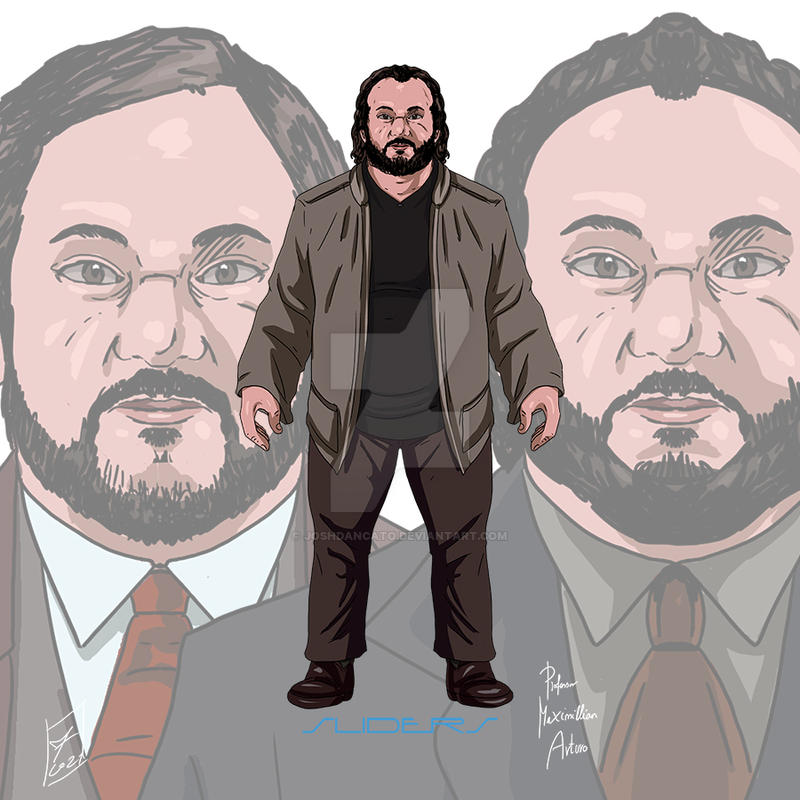
The professor? Well, he would be very proud!

I watched them both on my 55 inch HDTV, played on my Android TV box.
The Topaz enhanced version looks okay/good enough in mediums and closeups, but poor/terrible in wide shots. The Lanczos version looks okay in all shots, fuzzier and with a heavy level of what seems like film grain (but is really compression noise). The wide shots are still blurry and undetailed, but the film grain look makes it look consistent with the mediums and wides. It is consistent whereas the Topaz version keeps jumping back and forth between not-bad to terrible. Even if the episode is only looking okay, at least it looks okay from beginning to end. You get used to the visual quality and then you can get into the story.
cool. a worthy trade off.
It doesn't look as good if you're watching it on a computer screen and studying the image closely, but it looks good when played on my Android TV.
I wonder if the wide shots with the Topaz / Lanczos version are more forgiving at a distance... although it seems from what you are saying that you watched that version on the Android TV?
I guess I am wondering if the wide shots are as muddy at 10-12 feet vs. close up. I only say this because we also have to keep in mind that wideshots may be, what, 30 percent of the content vs. close/medium 70?
I've mostly been using Topaz Artemis HQ which is mostly about rendering film grain into pixel detail and removing compression artifacts. The medium and low quality Artemis settings are more aggressive with noise and compression artifact removal, but they create an overly airbrushed look.
The noise in the Lanczos upscaled files is compression noise, not image forming grain, so Topaz just removes it. It's not really worthwhile especially when Topaz needs 20 - 22 hours per episode. Usually, it only takes 7 - 9 hours to upscale a 480p image to 1080p in Topaz.
Gotcha, makes sense.
If anyone wants to learn how to build a filtration system as another factor to mitigate potential lingering covid in a closed environment, it's actually not that hard. Fan, some filters, a box, duct tape. I am sure Quinn and Arturo would have come up with something like this if not for penicillin!
https://www.youtube.com/watch?v=aEn2xzlvrdo
https://www.wired.com/story/could-a-jan … -covid-19/
https://www.texairfilters.com/iaq-resea … r-cleaner/
I watched a bit of "Prince of Wails" (Universal DVD, deinterlaced in Handbrake, upscaled to 1080p via Lanczos). The result looks good at 1080p; Lanczos deartifacted the image a little but left a layer of noise that looks like film grain. The grainy quality actually helps: the video image under all that grain is quite fuzzy and bare. I think I actually prefer this to all previous upscales of these episodes because it's the closest the low-res videotape image has come to looking like the original film. The blurry haziness is offset by the noise.
I did run a few shots of "Prince of Wails" through Topaz and -- I don't know if it's feasible because the AI needs 20 - 22 hours to denoise and deblock each 1080p scaled episode. Topaz did lift off the grain, but removing it just shows how dull and undetailed the image is without the grain.
The reduced compression texture might be best left there for these analog videotape Season 1 episodes. What's under the compression isn't very good anyway and would take almost a day per episode to unearth, at least on my hardware.
Hmm... so in this case, topaz was not able to use this faux film grain to actually create more image. because it's not actually film grain (even if it adds the texture affect to what was blurry stuff previously) -- it's more just noise, so it tries to remove it?
btw, when you ran topaz, what setting did you use? HQ?
Another thought -- I wonder if the Universal files might benefit from scaling them to 1080p via Lanczos before running Topaz over them.
interesting idea. another variable might be that such an ordering of things might behave differently on different episodes (I know, headache). I wonder if it would be more beneficial for ones that worked well with lanczos or more beneficial for ones that didn't (although in the latter case the end result may still not be good enough to justify using lanczos).
Loading the raw Universal DVD files into AVIDemux now to try upscaling them to Lanczos at which point I'll try running them through Topaz Artemis HQ to see if that creates any improvements. My soul can't rest without knowing.
ha! it's a rabbit hole.
Took some time to review the Topaz deblocked-denoised Universal DVD Season 1 files after scaling them to 1080p bicubically and then with Lanczos. Watched scenes from each of the eight post-pilot Season 1 episodes on my Android TV.
Lanczos worked out well with "Summer of Love," "Fever," "Last Days," "The Weaker Sex" and "The King is Back," scaling the image a little more forgivingly than bicubic and bringing out the detail a bit better than bicubic.
However, "Prince of Wails" had wide shots that looked really bad via Lanczos; it seems to be Topaz AI trying to sharpen up wide shots that weren't in soft focus and Lanczos blowing up that damage. In contrast, bicubic scaling added some pixelation at the edges that obscured the problems while also adding a bit of blockiness to medium shots while close ups looked as good as Lanczos.
"Eggheads" and "Luck of the Draw" were also blurrier than the rest on the Univeral DVD; Lanczos pixel blending made them even blurrier whereas the bicubic scaling added pixelation that made it seem sharper.
It'll be neat to see how the Universal files look when scaled via Lanczos with no Topaz deblocking/denoising, and then to find out if Topaz can do anything to improve those files.
I wonder what the characteristics exactly are that would cause some to benefit vs. some to not. Maybe it's not even a issue of something in production or post production but rather the general nature of the content and the composition of the shots.
Just one other piece here. I think it's really strange that SLIDERS, even on Mill Creek discs, looks not half bad at an old (small) tube tv from 12-15 feet away. I continue to think the HD era (along with larger tvs) really exposed the flaws of the original image, which was fine for the general specs and usage at the time.
It's very weird looking at SLIDERS at an ancient tv and thinking it looks better than on a modern one (although my tube one is only 12 inches or so, which plays a role here). It's also helpful older tvs are natively 4:3. I have noticed if you watch SLIDERS on a 16:9 in a dark room, the cut off sides aren't as annoying, because you really are only seeing the image area, and nothing else.
It's interesting: I was reading that the blu-ray and HD streaming re-release of THE X-FILES (Seasons 1 - 9), despite being composed of rescanned film, has many shots and entire scenes that are unfortunately fuzzy SD footage stretched to HD resolution for at least Seasons 1 - 2. Some are establishing shots, some are special effects -- but some are entire scenes that production would have shot on 35mm film. Why are these in SD videotape for an HD release? Why weren't they at least upscaled?
I imagine FOX must have lost multiple reels of film and could not fully reassemble every episode from film. Also, the effects and any stock footage are upscaled SD videotape. THE X-FILES' first two seasons were 1994 and 1995, so both would have, like SLIDERS, been film transferred to analog videotape for editing and effects. For the missing sequences, the HD versions of THE X-FILES would use SD footage that, like SLIDERS in Season 1, lacks the lines of resolution and/or film grain needed for an effective upscale.
Are there missing film sequences for Seasons 3 - 9? Possibly. But I imagine that by Season 3, THE X-FILES would have switched from analog to digital videotape and any missing sequences (as well as effects and stock footage) could be upscaled effectively, if not via AI, then through Lanczos and spline algorithms.
Well, these people, who I've mentioned before, did X-Files, and they do have properiety upscaling software (along with the auto-edit technology to autoedit a new film scan to match a dvd or vhs final edit) https://www.illuminatehollywood.com/
I talked to their top guy once to get a general idea on costs. You might be able to email them to try to get more info on the x-files, what happened with the non upscaled sd shots. I have noticed some brutally blurry ones. I also wonder if this just comes down to some slip ups where they inserted things and forget to upscale, or it was too much of a pain, and they had a lot of other work to do with it.
Back to SLIDERS: Just to see, I encoded the Universal-disc copied, Topaz deblocked / denoised "Prince of Wails" from 480p to 1080p with bicubic scaling. Then I played the 1080p file on my Android TV at 55 inches and watched the first 10 minutes. Then I played the 480p file on my Android TV and watched the first 10 minutes. I couldn't tell the difference. The cleaned up DVD file at 480p looks a bit hazy, but without the compression artifacts getting in the way.
The Lanczos version looked even clearer for close-up and medium shots, but wide shots looked jagged and ugly because the SD image had no detail for effective pixel blending. The bicubic version hides these issues with a pixelated fuzziness, but that fuzziness is present on all the shots, so if you get used to it after a few minutes, it isn't jarring.
I think I'll just leave the files at 480p; there's no point inflating the file sizes from 1.5GB or so to 3 - 5GB if the video output results are the same.
In terms of process: the only reason to run Topaz AI over these fuzzy Season 1 episodes is to remove DVD compression. However, I don't think the original NTSC master tapes would suffer from DVD compression; the blurry quality is due to 250 line analog videotape and the PAL masters are blurrier due to being copied via an analog process and stretched from 480 pixels high to 576.
I don't believe there's any gain to running AI processes over non-DVD compressed masters; they aren't effective on a 250 line videotape image. If they have to be put into a 1080p video file, they could be scaled bicubically. The Lanczos version is a little nicer than the bicubic version for medium and close shots -- but really not by much.
The pilot and Seasons 2 - 5 can be dragged and dropped into Topaz and upscaled via Artemis HQ to 1080p. They have sufficient film grain in the digital videotape for the AI to render the grain detail into pixel detail at a higher resolution.
Makes sense. I would say this... if ever there was a company to do an up-res, than a 5 percent improvement, even if it doubles file size, is probably worth it. Just as maybe having different processing for wide shots vs. medium / close. Now, in practice, no commercial entity would ever do that, but the way I see it, we have lovely, beautiful series here, that was shot on film, that is better television in a lot of ways than any of what we get today, that is simply classic programming and tracy torme was onto something... and it deserves to be treated like it should be hung in a museum. The way you would perfectly restore a great painting. That's why I admire all the painstaking experimentation you've put in here, trying every scenario, figuring out the best path.
Because I believe the content is worth of such an effort. To make it like new. And that's why, we can one day only hope, for a true scan of the 35mm. One of my favorite shots of Sliders is Remmy in the pilot, sitting in his red convertible in traffic, with the camera at an arms-length. When upscaled, it looks gorgeous. And the red looks gorgeous. I don't know why but the california streets remind me a little of Back to the Future content and how that film looks.
So I hope one day either through the magic of continued improvement in technology, or rescuing the film reels, we can get ALL of Sliders looking that good, and the presentation of it deserves.
Not really SLIDERS-related, but RussianCabbie noted that he doesn't feel all Season 1 episodes are at the same video quality and that "Fever" and "Last Days" actually look worse than the rest. While I do think they all look bad, I've personally rated "Luck of the Draw" as being the fuzziest among them all.
I've noticed something odd in THE DEAD ZONE. I was watching "Playing God" (Season 2, Episode 12, aired in 2003) and my HD upscale looks great, the picture of a digital film scan (or rather, 16mm film transferred to digital videotape and upscaled to 1080p via AI). However -- there are a couple shots at the end that are extremely fuzzy when Anthony Michael Hall and Ally Sheedy are having an argument. The shot with Hall and Sheedy in the same frame is really blurry. This master shot is intercut with single shots of Hall and single shots of Sheedy. The singles look like 16mm film / high quality digital videotape that upscale to HD perfectly. But the master shot looks like low resolution analog videotape. It cannot be upscaled to look like an HD shot.
I assume there was some sort of mistake in transferring the master shot to digital videotape, that the bitrate was accidentally reduced. It was probably spotted but ignored because in 2003, THE DEAD ZONE was being broadcast in standard definition to cathode ray tube TVs. No viewers would have noticed.
I wonder if SLIDERS' digital videotape episodes have any such errors.
Very interesting theory. Although I would say some episodes just look globally worse rather than the shots. Not sure if it's a post production issue or a production issue.
Now this is interesting. "Prince of Wails," scaled to 1080p via Lanczos, had really messed up wide shots which looked like broken stained glass due to the algorithm being unable to blend in the new pixels effectively. But "Summer of Love," upscaled to 1080p via Lanczos, doesn't have the same problem; the wide shots look about the same as they would through the bicubic algorithm while the medium and close up shots look okay / forgivingly scaled from 480 to 1080.
This speaks to what RussianCabbie pointed out: the Season 1 episodes are in poor video quality, but even within being poor, there are degrees of visual failure with some episodes being worse than others. "Summer of Love"'s wide shots weren't as bad as "Prince of Wails" for pixel blending.
Avidemux only takes about an hour to encode each episode to 1080p bicubically or via Lanczos, so I'm going to set a queue to encode each of the low quality eight Season 1 episodes to 1080p twice, once bicubically, once in Lanczos. And then I can compare and see which one yields better results and whichever ones look good in Lanczos can be retained.
Could the different between Wails and Summer of Love be the lighting in the shots, and how the algorithms are affected by that?
I don't see why you couldn't have a Lanczos-created 1080p file and a bicubically stretched 1080p file, made from a Topaz-cleaned version. And then assemble the best versions of each shot from both.
I just... don't have time for that. I need to go teach my mother how to use a Google Nest and an Instant Pot. And I need caulk for my windows.
Oh ok, you're response confused me a bit as I wasn't sure if you were saying that it wasn't an option.
I do think for the sake of the exercise you've embarked on, experimentation and all, it's good to document the "ideal" restoration process based on the findings, even if they actually won't be implemented for now. Reason being, it creates a historical record for any and everyone who refers back to this tremendous document. So that's why I asked about the mix of close-up and wide/medium shots. Because it seems like that's what's most optimal.
Topaz Artemis HQ for removing DVD compression (noise, artifacts), but leaving it at a 480P file.
Close-up and medium shots from this denoised, deartifacted version are effectively upscaled to 1080p via Lanczos.
Wide shots are best upscaled bicubically.
i see, so it'd be impossible to really slice that other. because the dimensions are different.
Hmm. Lanczos proved effective for closeup and medium shots, bringing them from 480p to 1080p without degradation (and the videotape image is already pretty degraded). However, for wide shots where the actors are standing at a distance and there was no real detail in the standard definition image -- well, Lanczos can't seem to figure out what colour pixels to add and what blending and blurring is needed to make it smooth. As a result, those shots have jagged edges that are really jarring when all the closeup and medium shots look okay.
The 480 version, when played at 1080p, had a certain layer of haziness from the bicubic scaling that obscured the problems with the wide shots. Lanczos, however, makes those problems really apparent, so I think the best thing is to either let the HDTV scale the image or create the 1080p file bicubically after all.
But not everything needs to be a 1080p file, especially when the file itself is not particularly improved by being encoded at 1080p.
I might just leave the Universal files as Topaz-cleaned 480p SD files. I mean, for Seasons 2 - 5, my best versions are just the plain Turbine 576p SD files that scale to an HDTV just fine and I won't be boosting those any further.
Would the best way, throwing time aside, really be splicing between two different up-res files? One for wide shots, one for closeups/medium?
The Lanczos algorithm turned out pretty well for taking the Topaz Artemis HQ deblocked-denoised 480p file of "Summer of Love" and increasing the resolution to 1080p (although it took a 1.8GB file and made it 5.5GB). The Lanczos 1080p video file looks a little better than my blu-ray player or Android TV bicubically scaling the 480p file to 1080p; the added pixels are smoothly integrated into the image to avoid jagged edges.
My upscaling blu-ray player, when playing the disc, toned down the DVD compression artifacts, and bicubically stretched it to 1080p, creating some pixelation at the edges of any objects or people. Topaz AI has been able to remove remove that compression from the DVD file completely. Lanczos has taken that denoised, deblocked file and smoothly stretched it to 1080p without creating any pixelation.
The cleaned-up/Lanczos stretched version doesn't look HD, but the low quality SD flaws of compression and pixelation have been removed. The AI issues of jagged, flickering edges and watercolour distortion are avoided. Admittedly, the underlying image remains a 250 line analog videotape instead of a 540 line digital videotape, but the artifacts and pixelation issues were a massive distraction from the story. Now they're gone.
well that's progress!!!
I did have to turn off all Lanczos sharpening functions.
Lanczos on my old home theatre PC was fine for upscaling early 2000s standard definition TV because all those shows were shot on film or digital HD and simply downscaled to SD, so Lanczos was merely restoring the sharpness inherent to the file. SLIDERS in Season 1, unfortunately, is a pretty fuzzy image devoid of grain detail, so there isn't much for a sharpening filter to build upon.
Most blu-ray players and TVs will scale an SD video to HD with a bicubic algorithm that increases pixel contrast at any edges within the image in adding more pixels. Lanczos blends the added pixels into the image more smoothly, and is a more forgiving scaler, but because it's CPU-demanding, it's more than what a blu-ray player or Android TV box may be able to offer.
My old HTPC used an i5 processor and a dedicated GPU to make it happen. Sadly, I don't have it any more after a power surge. In most use cases, Lanczos is best applied when encoding a video so that the gains are contained within the file itself.
yikes... losing a computer is NOT fun.... i lost a tv that way.
The AI deblock-denoise takes about seven hours per episode and Avidemux using Lanczos in stretching the video to 1080p takes about 90 minutes per episode, at least on my hardware. I wonder how much that would factor into a future upscaling effort from a home video distributor or streaming service.
They certianly would not differentiate how they treat different seasons. You can see just how much of a learning curve it's been for you in terms of understanding the underlying content. Which is why I'm not sure we'd get a better AI upscaling job from a studio. And yea, the amount of time this stuff takes... if we're talking 88 episodes. It's just too much of a pain for them. That said, doing one season might be something they'd do if a creative involved or an executive of importance was able to call in a favor.
Look at Seaquest. That was amblin/spielberg so... they did a true remaster/film scan etc. And it looks great.
Different upscalers have different results, I guess. AI upscaling to higher resolutions isn't effective Season 1, but the really limited upscaling of my Samsung blu-ray player seems to hit the right level for both the Universal and Turbine discs.
I would be interested in running an AI upscale over the Universal Season 1 episodes that leaves them at 480p, serving only to remove the compression artifacts. This would achieve the artifact-free look of the Turbine versions but retain what little sharpness is present in the Universal release. It wouldn't be an upscale, really, just denoising and deblocking to remove the damage done by the DVD authoring.
However, I am currently running an upscale of UNIVERSAL SIGNS again, trying to get it to 1080p this time and remove all the compression damage on the Vimeo file. But I could probably run the Season 1 episodes through the AI processing again and see how it goes.
But I have learned my lesson; looking at brief stills doesn't give a sense of how well the processed file plays on an HDTV, so I won't talk about it until I've actually watched at least 10 minutes of a processed episode.
It's a tricky thing because everybody's equipment is different, plus the post-processing in real-time isn't totally a reflection of the disk. Although all blu-ray players and tvs to a certain degree do upscaling, as you said. So I guess it's OK to factor that in. But then in your case you said S1 looked better because the upscaling didn't over do it.
Tried playing the Universal and Turbine files for "Luck of the Draw" on my Android tablet (Samsung Tab A7, 10.4 inch screen, 2000x1200 resolution). There doesn't appear to be any upscaling.
The Universal DVD file looks okay. The image's somewhat fuzzy, lightly obscured by DVD-compressed noisiness; MX Player deinterlaces the file effectively and it plays fine as an SD image that's been scaled to a high resolution on a small, personal screen. The compression noise, however, has been scaled to a higher resolution and those stretched artifacts can make the image look really rough and unpleasantly low-res. I mean, it is low-res, but it becomes hard to ignore it in some of the daylight shots.
The Turbine SD blu-ray file also looks okay. It's a little less sharp than the DVD version, but that suggests that the DVD version could even be described as sharp, which it can't. The Turbine version also doesn't have the noisiness covering the picture, so it doesn't create the rough, ugly texture of the stretched DVD file, it looks smooth and clean. That cleanness is really a lack of texture and detail, but if you can get used to it, it doesn't distract like the upscaled artifacts of the DVD file.
The 'best' version of SLIDERS' first season might be a standard definition version without all the compression artifacts, either through a new scan of the NTSC masters or running the Universal DVD files run through AI upscaling but strictly to deblock/denoise it and output a 480p file. The video would retain sharpness in the NTSC masters and could scale to larger screens without increasing all the compression artifacts. However, you can get almost pretty much the same results with an upscaling blu-ray player.
I'll re-try the S1 on an xbox blu-ray player which has a lot of upscaling techto take a second look, but iirc it will still look pretty bad. The turbine release looked pretty bad (maybe the PAL messed with the upscaling tech).
FWIW, I found out the MillCreek Release Made about 200k domestically, in revenue (not talking profit here). I don't now, maybe we can convince Universal to spend 100-150k upscaling S1 if they felt it could make the money back in a blu-ray release and enhance peacock's offering. But they may expect Peacock to pony up some cash for that and I doubt they would (maybe 20k at most).
Another peculiar (and strictly anecdotal) situation: the Turbine blu-ray files offer superior results on my Android TV. I don't know why this is.
I tried playing the raw Universal DVD files and the raw Turbine blu-ray files of "Luck of the Draw" on my Android TV box (hooked up to my HDTV) with the MX Player app.
My Android TV box did something strange: it oversaturated all the colours, making Quinn and Arturo look weirdly orange. Everything was too rich. There seemed to be some oversharpening as well: the raw DVD file looked blocky, jagged and the amped up colour accentuated the DVD compression and artifacts. It looked hideous.
I tried playing the file in VLC and got the same results. It must be something within the MiBox 3's SoC and decoding settings that's adding increased saturation. I've never noticed oversaturation with my other video files on my MiBox 3. Maybe they benefit from it and Season 1 of SLIDERS doesn't.
I have no idea why it did this; my HDTV has the same colour profile for the blu-ray player. I played the raw file on my blu-ray player and my blu-ray player didn't increase the colour or sharpen the video so unflatteringly.
I played the Turbine version of "Luck of the Draw" on my MiBox 3 -- the blu-ray file as MKV. The colour saturation was increased here as well, but because the raw file was discoloured, the increase made it look normal. In addition, there seemed to be some mild sharpening and the raw blu-ray file looked okay -- certainly not HD or even at the level of the post-Season 1 episodes, but adequate and acceptable as an upscaled image on an HDTV. It looked as good as the upscaled Universal DVD on my blu-ray player.
It's very strange. Speaking only for the equipment I have here: for Android TV playback, the Turbine versions turn out best. For upscaled DVD playback, the Universal versions are best.
Now you know why colorists tear their hair out trying to do film coloring. So many variables.
RussianCabbie_Lotteryfan wrote:ireactions wrote:Looking at the discs through MakeMKV.
Turbine likely used more modern-to-2015 video codecs to create the blu-ray files from the PAL masters.
Interesting..
Yeah, looking at the Universal DVDs (any episode): there's compression artifacts. Blockiness. Noise that isn't film grain.
Looking at the Turbine blu-ray: the compression artifacts are not there. Any noise on the image is film grain. However, the compressed Universal DVD is artifacted and blurry for post-Pilot Season 1 episodes. The uncompressed Turbine image for Season 1 is not artifacted, but a bit blurrier and missing almost half the colour.
Put the raw video files from the discs side by side and Turbine looks washed out and fuzzy while Universal looks saturated, blocky and also a bit fuzzy if you look past the blocks. Put the discs in an upscaling player and they end up looking about the same.
I'm afraid I made a mistake. You see, when I first got the blu-ray, I was raving about how great the blu-ray SD files looked for Season 1 on my HDTV. But I see now: I was ascribing to the disc all the great work that my disc player was doing. I have a feeling my job application for blu-ray.com will not be going forward.

One thing to also remember is how different Goodfellas looked for you vs. me. I had what seemed to be a lot of pixelation (compression artififacts?). I know it's S2, and you're talking about S1 above but the image looked terrible. That said, I mostly found S2 episodes better on turbine than universal.
Looking at the discs through MakeMKV.
Turbine likely used more modern-to-2015 video codecs to create the blu-ray files from the PAL masters.
Interesting..
I've been rewriting the first post of this thread, updating it with a summary of the video quality of each DVD set.
I've come to realize something: the Universal DVDs are not bad. I've said repeatedly that they are, but they aren't. Yes, DVD compression and interlacing can diminish video quality, but upon further review and comparison, the Universal SLIDERS DVDs don't have particularly small file sizes (1.6 - 1.8 GB per episode). The non-Pilot Season 1 episodes look terrible because the video masters are blurry, because they were film transferred to analog low resolution videotape. The DVD compression and interlacing don't do it any favours, but lifting off the compression and decombing have only further revealed the poor quality of the image underneath.
Seasons 2 - 5 on the Universal DVD sets look good. DVD compression and interlacing have marred them, but the underlying video image is sharp, detailed and defined; the film to digital videotape transfer has maintained a scaled down version of the film's crisp detail. An upscaling blu-ray player and/or HDTV upscaling can make them presentable; AI upscaling can make them look like impressive HD approximations.
Mill Creek, however, is bad; Season 1 looks terrible, blurry and artifacted from overcompression, Seasons 2 - 3 are hovering around poor to okay, looking fuzzier than the Universal versions and covered in blockiness and noise. Seasons 4 - 5 look average; the 16mm film image is grainy to begin with and a decent blu-ray player and/or HDTV upscaler can smooth out Mill Creek's damage while AI upscaling can remove it completely.
I think Season 1 looking so bad on Universal just made me feel biased against the rest of the Universal discs, but I've come to realize that SLIDERS' video quality on the Universal DVDs is as good as it can be within the limitations of DVD and the masters.
It's interesting that you mention that. I've always thought seasons 3-5 look good on dvd, 4-5 really respectable for sd.
S1&2 hasn't held up for me but the initial reviews were pretty positive.
As far as I understand though universal was still doing 500mb per episode, correct? Outside the pilot.
It would be interesting to see Tracy and Marc's work together since they both have an appreciation for the Twlight Zone angle of sliders.
That said, I honestly wonder if Tracy's black comedy or SNL type humor in general would be a "frequency" Marc would totally also be able to operate on.
I think Tracy and Larry Wilmore might be an interesting pairing where they could riff of each other tho I am not sure if they'd have some clashing worldviews (not to mention Larry would be like who the heck is this Quinn guy and why are we going back to him.. so there's that oroblem)
More essays from Annie Fish, who is writing a SLIDERS book!

Bah! Medium quality has been a disaster on every episode aside from "Fever," it all looks like watercolour animation. I give up! Life moves on! I want 1080p versions of all the masterpiece episodes of THE DEAD ZONE!
hahaha
sorry medium didn't work out!
ireactions wrote:I was listening to Tracy Torme's January 2021 Dark Matters podcast and he had some interesting political views.
Dark Matters podcast has completely vanished from the internet! I can't find the mp3's anywhere.
this interview / link is working again.
With THE DEAD ZONE: Seasons 1 - 3 after Topaz upscaling look absolutely perfect. 10 out of 10. They look like a digital film scan.
It's because Seasons 1 - 3 are grain based images from 16mm film, edited on high definition digital videotape and downscaled for broadcast and DVD and with all the film grain still present and available for an upscale.However, THE DEAD ZONE's Seasons 4 - 6 after an AI upscale look like an upscaled DVD. It is an amazing upscale and no blu-ray player could do this sort of upscale during playback because all the compression artifacts are gone and the resolution has been increased through smooth pixel blending specific to the image textures to ensure no new artifacts or imperfections. But fine details like pores and grass have a slight blur to them. It's because these seasons are pixel based images from digital cameras, edited digitally, then downscaled for broadcast and DVD.
The DVDs themselves look pretty much the same across all six seasons of this show in terms of video quality and characteristics (grain, sharpness, clarity, detail). There's no weird discrepancy like Season 1 of SLIDERS being denoised and blurry and Season 2 being sharp and grainy. THE DEAD ZONE made some effort to retain its visual identity even though its cameras and filming location changed.
However, THE DEAD ZONE's look certainly shifted with digital cameras, but where SLIDERS benefitted greatly from the digital videotape format, THE DEAD ZONE suffered a little for the transition into a fully digital format. The first three seasons of DEAD ZONE benefitted from film because for film, productions light everything with thought as to how that light will show up through the film chemical process.
In contrast, digital videography captures video 'as-is,' and lighting and colour are often adjusted afterwards. There is less thought put into lighting a scene as it's adjustable in post, there are also artistic limitations. Seasons 1 - 3 were very artful and deliberate in lighting. Johnny Smith's house in THE DEAD ZONE had, in Seasons 1 - 3, a cozy warmth with a sense of amber comfort where every room seemed to be lit like it had a fireplace even if it didn't. From Seasons 4 - 6, Johnny's house just becomes 'dark.' It could be fairly said that THE DEAD ZONE's later seasons' use of digital cameras just make it look cheaper and shabbier much like SLIDERS in Seasons 4 - 5 not really bothering to use colour or its absence for storytelling and just looking beige.
Nothing to do with video quality itself, of course.
Keep in mind, the reason they went to digital video and cut out film in the deadzone may have been a strong need to lower cost, and in that strong need, the desire to light it well or work longer hours to light it well may have diminished. I guess I am saying, it may not have been 100 percent about the flexibility to adjust in post, it may have also been like, "this show isn't not a big enough of a hit to put as much thought in it, let's just shoot in dv and keep it moving. get to 88 episodes and syndication."
Has anyone noticed the Sliders theme on Love Gods via Peacock. Acts like its playing on 1.25x
hmm. I am comparing it with Into the Mystic and not noticing a difference?
So does that mean that THE DEAD ZONE content for S1-3 looks better after topaz processing than S4-6?
I assume on the dvds itself, the 1-3 don't look as good at 4-6? Or maybe that's a draw.
You know, RussianCabbie, I think you're right that the Artemis medium quality preset might be better suited to the Season 1 episodes. Here's "Fever" via Artemis MQ preset.
I have to say, this is looking better than the HQ result. The wide and medium shots had serious aliasing issues in the original video files. The HQ preset didn't make that worse, left it alone but inflated the issue of edges of people and objects having phantom outlines around them. The MQ preset smooths that out, adding a touch of blur to those outlines, blending these flaws out of the image. There's a bit of blurriness, but it's for a wide shot.
Well you get all the credit here, I was just asking some questions along the way.
I guess I'm upscaling the other seven post-Pilot episodes of SLIDERS again, this time on the MQ preset. What is this, the seventh time? The eighth? I've had to position some ice packs below the laptop stand for extra cooling.
About 15 years ago, I broke an older laptop whose fan was dead because I kept watching video on it for a sustained period of time and it got to hot..
I don't hear anything in the commentary about the technical means for filming the Pilot scene with Quinn and Smarter Quinn aside from remarks that they found a body double who looked just like Jerry O'Connell once they put a wig on him. Torme says that Jerry had an uncannily close body double in the recent livestream, too.
I'm guessing that this person is James Bamford, a Vancouver stuntman who's career began in 1994 with VIPER (shot in Calgary) and MANTIS (in Vancouver). Bamford performed as Jerry's body double in "The Unstuck Man," and I'm assuming that he was Jerry's double between the Pilot and Season 5 too before going back to Vancouver to serve as stunt coordinator on numerous shows and then moving into superhero TV directing in 2016.
They did merge alternate sides of the film negative over each other. But it's customary to have a body double play the other side of the scene so that the actor has a scene partner for timing. Jerry would have performed in the shot as Quinn alongside a body double playing Quinn-2. Then Jerry would have performed the same shot as Quinn-2 with a body double for Quinn. These shots would then be composited on top of each other; the sides of the shots with Jerry's Quinn would be kept and the sides with the body double would be covered.
I can't recall where I heard the two week thing, but I don't misremember those sorts of things. Maybe it was in the Sliders EPK, if not the dvd commentary, maybe it was in an article. I remember being quite surprised. I think the result turned out amazing though. Especially the side shot of the vortex.
I would argue that in "Greatfellas," Cleavant plays Rembrandt and Rembrandt-2 and Clinton is used as a body double. Cleavant plays Rembrandt-2.
Yes, in shots where both Rembrandts are in the same frame, Clinton's face is certainly visible and can be distinguished from Cleavant, but Clinton is always slightly angled or moving (but not obscured). Also, the double shots have Cleavant and Clinton switch roles to try to average out the differences.
At the end, Clinton (playing Rembrandt) and Cleavnt (playing Rembrandt-2) are standing together.
Then Clinton/Rembrandt runs out of frame, leaving Cleavant/Rembrandt-2 alone.
We go to a shot of Rembrandt, now played by Cleavant and not Clinton, saluting Rembrandt-2.
Then we cut to Rembrandt-2 and Rembrandt-2 is also played by Cleavant.
Clinton is removed once there's only one Rembrandt in the frame.
Good breakdown... helps me know what I was seeing. I think it's pretty easy to tell when it's Clinton. Actually, now that I think back about it, I have noticed how well Cleavant plays the agent more straightforward than his remmy character to the point it's like two different people.
Regarding the STARGATE SG-1 blu-rays: I have only seen two episodes of the show (the first two, and on the blu-ray). But even from those, it's clear that distributor, Visual Entertainment Inc., didn't do a very good job.
I don't know the show well, but fan reviews remarked that on the box art, the Stargate is incorrectly drawn and that the cast photo uses a character lineup that was only in place for one season out of the 10, indicating that the distributor had clearly never watched the show -- which reflects their upscaling process.
VEI not only failed to improve effectively on SD video, they actively damaged HD video. Seasons 1 - 7 were edited on digital videotape. VEI upscaled them to 1080p, but their process was the equivalent of Topaz LQ, creating a clean image, but one that was also a bit blurrier than it needed to be. It would have looked like the 720p upscales of Seasons 4 - 5 where there was a bit of natural film grain on an HD-acceptable image. But then VEI ran the files through another round of image smoothing. Likely, they did this to avoid all the jagged edges that often show up in upscaled video files, but rather than do it selectively, they did it to every episode, adding another layer of blurriness.
It was probably unfeasible to watch seven seasons of TV to find the specific scenes that didn't upscale well, but then it would have been best left it alone and let some shots be flawed rather than adding further blurriness to all shots.
With Seasons 8 - 10, VEI ran their image smoothing process again -- which was nonsensical. Seasons 8 - 10 were shot on digital cameras; they were already in 1080p. VEI took sharp HD video and made it blurrier. The only reason I can see for this: one of their marketing elements is to declare that their blu-ray products offer a "Super Clean" picture, even if the image does not need to be super cleaned.
VEI also reportedly messed up the surround sound. Sometimes, enabling it on the disc turns it off while disabling it turns it back on, and it's completely random across each episode.
It sounds like a mixed bag, but also it does seem like some fans are happy to have that release. But it emphasizes my larger point -- I would be quite concerned about any party doing an upres or restoration without input from a party who is really going to try to help in quality assurance. These entities don't have the time to compare different settings for different things, they don't know the content, etc. They want to do a batch job. They dont have the man power or time to sit through and rewatch everything.
I've mentioned in the other thread about my desire for Tracy to oversee a restoration process if the peacock gig doesnt happen and they could do a sliders special or roundtable alongside it. Or something. I was just saying that because I want someone on the inside who'd actually give a crap the way things looked.
The best way to really do it is get a scan on the 35mm from the studio and then handle the rest outside of that. The post production. That said, studios are big on not allowing anyone to change their content. I am not sure what deal VEI, had, and it's MGM that owns stargate i think but generally, i think even doing an upres isn't necessarily allowed for like a tv broadcast, but then again we suspected that may have been done by The Hub, so I don't know.
Point being studios tend to not want content altered. Anyway, I think it's highly unlikely a scan of the original s1 film reels can happen, but i do think there's a course to make it happen. It would just be hard to make happen. But, you look at The Prisoner on streaming now, and it's like wow. Why can't we have that? It'd be incredible to see Sliders the way it was meant to be... although I doubt it would have the color vibrance of The Prisoner. Not even Back to the Future seems to have that.
Back to SLIDERS: in terms of upscaling, Seasons 2 - 5 would look good if upscaled, but there will always be a certain haziness to medium and wide shots that separates true high definition from HD approximations.
There is one more thing I haven't tried with Season 1 yet. There was a fan upscaler who shared his process awhile ago. (He then went dark and destroyed all his social media posts.) His process: he didn't just use Topaz video upscaling. For numerous shows including XENA and LOIS AND CLARK (but not SLIDERS), he used Topaz Video to extract an upscaled version of each frame of the video masters (which he somehow acquired) and saved each frame as a PNG file.
Then he ran an upscaling process on each PNG file, apparently sharpening them up, refining all the details, and bringing the resolution to as high as 15,000 pixels tall. Then he scaled the PNG files back down to 4K or 1080. Then he reintegrated the PNGs into a video sequence via Premiere Pro and added back the sound.
I have Topaz Gigapixel for upscaling still images. But I'm not sure I would get the same results for SLIDERS as this fan upscaler had actual video masters whereas I have DVDs. In addition, I don't even know if these frames we're seeing can be upscaled because, as he explained his (destroyed) notes, the upscalers use grain and these Season 1 files are very short on grain. I'm also not sure if my external 1TB spinning hard drive and external 120 GB SSD are enough for even one episode of this increasingly over-the-top endeavour.
I've actually thought a little about this myself, if Topaz AI hits his limits, is upconverting with their photo software each frame a way to get even better quality.
The issue might be that the video AI may do something that's either entirely the same and breaks down all the frames and makes it a batch photoconversion job, or they have made some trade offs for processing time to get a 1 hour piece of content done. I'm not sure how realistic speed wise it would be. And you noted possible storage drive issues.
I'm also just not sure there algorithm is any different for photos vs. video. I have used some AI photo things in the past on the web, and I have been trying to find them the past couple of weeks, but I can't find what i used. I wanted to try on a frame of sliders to see the results. I suspect it may still have a hard time with the underlying content from s1. But it would nice to be surprised. In anycase, whenever I google, I can't find the ones I tried in the past (which were great back then).
Maybe they were taken offline because they couldn't handle the cost of doing free photo demos for people.
here's an old one I did:
BEFORE
AFTER
Open each photo in a new tab and flip between tabs to compare. There was a fair amount of grain in the original shot, of course.
A couple of interesting links:
In the Pilot and "World Killer," Jerry O'Connell is interacting with a live person. His name is James Bamford, a stunt coordinator and body double. Jerry performed as Quinn in one shot with Bamford playing the other Quinn. Then they'd switch. Then they'd edit the scenes together, having recorded with a motion-controlled, motion-recorded camera so that the camera movements would match on both versions of the shot. Cleavant and Clinton should have filmed the same way, but in "The King is Back," an odd choice was made where Clinton played all of Rembrandt-2's scenes. Production should have had Cleavant film Clinton's scenes as well, and then arranged it in editing so that whenever Rembrandt or Rembrandt-2's face is clearly in profile, it's Cleavant's face and not Clinton's.
It took two-weeks to do that Pilot scene shot so I suspect they had Clinton play Remmy2 for speed/production cost purposes...
I have never been clear on why they used Clinton as Rembrandt-2. I wonder if some early attempt at DeepFake was in mind. However, "Post Traumatic Slide Syndrome" in Season 2 attempts DeepFake with the Professor and his body double and it's so bad it's funny; thankfully, Adam Nimoy made it a very brief shot blurred by motion. In "Greatfellas," Clinton and Cleavant shot each scene twice; switching roles for the second version, and then editing put it together so that Cleavant's face is Rembrandt and Rembrandt-2 and Clinton is always slightly angled away from the camera when his face is in view.
Really about Greatfellas? Because I always felt I could tell the difference between the two actors...
In the pilot, even with the body double, there are scenes where both jerrys are in the same shot, and i think in the pilot commentary they explained how they did that. Didn't they just superimpose the film negative over each other in that one?
*sigh* If SLIDERS had just been delayed by one year, Season 1 would be on digital videotape.
I've been watching some 2002 - 2008 episodes of THE DEAD ZONE on DVD. It's a DVD image and it's 3 - 4 episodes per disc, so the video quality is only adequate and a touch fuzzy, very much the average DVD. However, it was clearly shot on film (aside from digital cameras for some special effects sequences). And it looks like it was edited on high definition digital videotape, so that high definition video detail is still there, just muted by the reduction from high definition HDV to standard definition broadcast and DVD.
As a result, Topaz has absolutely no trouble restoring the high definition video quality of these episodes because it's mostly there on DVD, diminished but not destroyed.
A couple of ideas have come to mind. There's obviously some of the dvd/blu-ray companies.. including the one that did the stargate bluray. I'm gonna think more about that. You'd essentially have to push someone at Universal to see the "bigger picture" of having an hd version of the s1 (especially if the show comes back), for global syndication (it's still in re-runs on occasion worldwide) and peacock, and then if you can find a blu-ray partner who'd pay part of the restoration cost (up-resed special effects of course)...
But that will be a little difficult to communicate / get going.
Another idea I had was.... well, let's say a SLIDERS documentary was being put together, and there was an inquiry to licensing the footage for use in the doc. Let's say the documentary was aiming to be in all HD. Because that's what distributors/streamers in the marketplace expect nowadays. How much would it cost the filmmakers to get 35m scans of let's say 10 minutes of footage? It's a way to see if they still have negatives, and how much maybe per minute an HD upgrade might cost. Universal has an inhouse studio services division that would likely do the work for them-- this services team actually also works with outside parties on all types of content as well.
I mean one never knows, maybe there's an S1 blu-ray with a special documentary.
I will actually run "Fever" through the MQ preset and share some screencaps. But until then, here's "Last Days" looking okay. This is the image once the compression artifacts are removed. Aside from that, it's just the DVD image with all its other qualities preserved at 1080p.
Even though s1 non-pilot doesn't get the holy grail out of this process, it clearly is a cleaner image, and more HD ready.
Strengths and weaknesses of the Artemis HQ upscale for "Fever"
I always thought Fever and Last Days were among the most crappy looking episodes in all the mediums (streaming, dvd, vod, etc).
When you look at those screenshots, do you think the HQ setting is definitively the best for Fever? LQ hits waxyness too greatly, I assume?
I think it might seem a peculiar proposition: of the 88 episodes of SLIDERS, 80 can be upscaled via plug-and-play, but eight need the original negatives rescanned. A distributor would probably elect to upscale all 88 even if eight would be below the standard of the rest.
They could do that... and I wish they would. The issue becomes if they feel comfortable labeling a blu-ray as a blu-ray if it's all upscaled content. How much precedence is there for that? How do they handle.
I would love for Turbine or someone else to release an upscale. Or universal to do it. That said, 65 hrs of upscaling is still somewhat expensive I think. I mean off 88 episodes.
So you got consumers who mostly don't want to pay north of 40 bucks for something. Not many are willing to spend 150 bucks plus. And yet the expense of upscaling everything... because machine time.
I don't really know how much it would cost, or if consumers would accept it as a blu-ray, or if they'd complain and you get bad reviews. I would very much like to see a GOOD upscale job. I think your samples for s2-5 people would consider mostly viable as 1080, especially because it is just so much better than anything we've had before, and s1 is still better as well, and the pilot is gorgeous. But if someone does a shitty job, because they are lazy (that will be most production houses/distributors) than it's harder to market as a blu-ray. I guarantee you would have done a better job on Stargate or some true fan of the content, because of LOVE.
I honestly never would trust universal with an AI upscale job or anyone else that we couldn't have direct contact with. They would choose one standard setting, and push start. And that's it. Someone like Turbine would probably listen and be less lazy about it.
Would you be inclined to look up the instructions and devise a process for DeepFake where we replace Clinton's face with Cleavant's in "The King is Back"? I have the hardware, but I lack the knowledge. We could post clips of all the Clinton scenes here; that wouldn't be the whole episode, just a selection to show proof of concept.
I don't have knowledge on that as well, but I assume they are mapping/scanning some celebs face, and then map the models face as well, and super impose. I think there are cell phone apps that do this as well. I will see what I can find, if there's any programs built for it.
I guess the Clinton's face bothers you but I kinda like it knowing it's another real human being in the same room rather than taking the same actor and splitting the image. Although they did a great job in the pilot and world killer with Jerry on that.
What happened?
the guy said he couldn't send me something yet (it was some music that had delayed its release date) and i said i'd wait and then he never sent it months later, after i followed up to remind him of this.
RussianCabbie_Lotteryfan wrote:ireactions wrote:I'd guess 12 per cent, mostly vortex shots, the spider wasps, the flood, the shark, the oil wells in San Francisco, Quinn's billboard face, the shot of the asteroid exploding from the missile and the birth control cola shot. Aside from that, I can't see there being much and the vortex is even more infrequently onscreen in Season 2; they sometimes don't even bother to show the sliders jumping into it one by one and just have the actors run offscreen. There's a peculiar irony to how SLIDERS at its most expensive had the fewest special effects whereas its budget overruns in Seasons 3 - 5 had it attempting as many effects as possible.
Interesting. . I was thinking it was a couple minutes of content per 43m episode. We get our vortex shots but most of it is practical. As you said, s3 is where they ramp up that stuff.
12 percent would be about 4 to 5 minutes per episode. You know the material better than I.
Well, without the billboard shots, the swarm, the flood, the shark, the oil wells and the asteroid, I would have put the effects at seven per cent (three minutes per episode). I'm just guessing. We could probably calculate it down to the second. It's only eight episodes after the pilot.
I wonder if at some point, we'll get software that can create computer generated models from the frames of the Season 1 episodes and rebuild the episodes as photorealistic computer animations that mimic the standard definition image but at HD levels. Alternatively, we'd just get better upscaling technology that can sharpen even without the grain.
One effect that I do think we could do as fans although I don't know how yet; I would like to use DeepFake technology on "The King is Back" and replace Clinton's face with Cleavant's.
I'd be willing to log the special effects shot for the stakeholders just as a proof that the series, while sci-fi, is not special effects dominant, and may not be an inhibitor. I'd be willing to do whatever labor to cut down on there's. I bet you would too.
I'm really interested like you where the up-res tech goes. Has it platuted? Or can it keep going further? And is there any incentive for them to work on training models for visuals as fuzzy as the source content (s1) we are talking about? Or is it too niche for them to even try to address that use case?
I think trying to smartly add texture/grain back into the image, and then building off that gain might be a solution, but you also really have to figure out how to sharpen images/boundries without pixelating/jagging content. You have to figure out how to condense blurred boundries and not sharpen areas that don't need the work.
I think it will be awful hard for anything to intelligently build/reconstruct the s1 objects/forms as they should be. They may make some gains in wider shots, not bluring on people in the distance etc.
I've certainly dreamed of deep fake technology being able to make old characters have "new" content again... maybe in 25 years we'll be able to work with realistic character models of the sliders group and put them against backgrounds, and pull from an audio library of their words to insert sound. 
Here's the thing about Season 1:
Peacock would probably see a 2x lift in viewing numbers if they had S1 in HD. Now how much add dollars does that translate for them? I suspect it's not all that much. I don't recall how many commercial minutes peacock inserts but they make about 10 dollars for every 30 second ad per 1000 views. Let's say they get 25k streams of an episode at this point. If they have 6 minutes of commercials, that's 12 ads, which is 12 cents per stream in revenue. So that's $3k in revenue for that episode with 25k views.
If you double that stream total, it's another $3k in revenue. Across 8-9 episodes, you are basically talking about a total additional $24-27k in revenue as an estimate for HD content, assuming S1 is HD. It would have a halo effect on the other seasons viewing, so you can bump that to $35k.
I'm making assumptions of course, but it gives a general picture.
Now, $35k in increased revenue, may be $100k over a ten year span (sliders on peacock has only been on two years).
Then when you add you add $60-150k off a blu-ray profit, and increased sales on VOD, it sort of all adds up to some small justification for HDing a S1. But barely, and not very clearly, and also, companies want to go after big opportunities, not small ones like this. An upres is ballpark $~100k cost.
And it's tough because Universal's licensing group acts like its own company from peacock, and a peacock is seperate from a third-party blu-ray company. So the benefit to take on the entire HD cost may not be clear for one individual party, but adds up for everyone collectively.
I was poking around and I noticed Stargate did a blu-ray release, and actually just up-resed some of the older content without re-scanning. Some of the issues with the waxy look and lack of grain were there, but it's clearly better than the dvd.
I also noticed that company I linked to with iConform technology (to scan the negative and then automatically edit it together from a reference source) used the tech on a recent Baywatch Season 1 release. They've also done jobs on the star trek and x-files blu-ray releases.
If Sliders really isn't that special effects heavy, at least for s1 non pilot, you almost wonder if it wouldn't be that much more work than what they did on Baywatch. Grab some time codes for the vortex or the killer bees and insert upconversions on the special effects shots. X-Files actually did this in some of their stuff.
Sliders.tv → Posts by RussianCabbie_Lotteryfan
Powered by PunBB, supported by Informer Technologies, Inc.
